# Configure Salesforce as a data pipeline source
Set up Salesforce as a data pipeline source to extract and sync records into your destination. This guide includes connection setup, pipeline configuration, and key behavior for working with Salesforce as a source.
Workato uses the Salesforce Bulk API v2 (opens new window) to extract and sync data efficiently at scale.
# Features supported
The following features are supported when using Salesforce as a data pipeline source:
- Extract data from standard and custom Salesforce objects
- Support for full and incremental sync
- Field-level selection for object extraction
- Schema drift detection and handling
- Field-level data masking
# Prerequisites
You must have the following permissions to connect to and extract data from Salesforce:
- An active Salesforce user account with API access
- Read access to the objects and fields included in the pipeline
# How to connect
Complete the following steps to connect to Salesforce as a data pipeline source. This connection lets the pipeline extract data from Salesforce.
Workato supports OAuth 2.0 for data pipelines, which provides a more secure and scalable authentication method compared to alternative connection types.
Connect to Salesforce
Select Create > Connection.
Search for and select Salesforce on the New connection page.
Provide a name for your connection in the Connection name field.
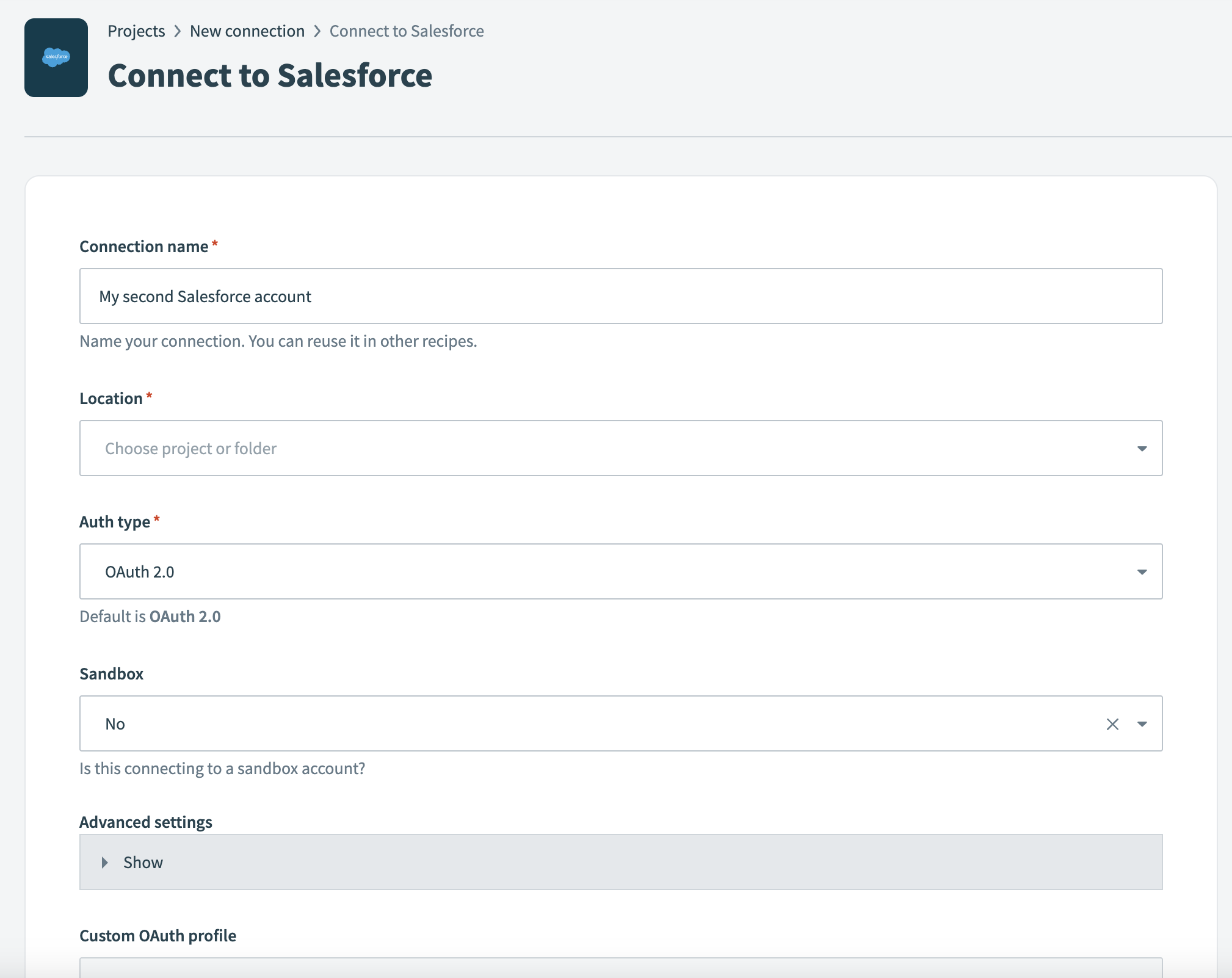 Salesforce connection setup
Use the Location drop-down menu to select the project where you plan to store the connection.
Use the Sandbox drop-down menu to specify whether the connection is a sandbox account.
Select OAuth 2.0 as the Auth type. This is the default and only supported authentication method for data pipelines.
Optional. Expand Advanced settings to configure advanced connection options.
Optional. Select a Custom OAuth profile to restrict the connection to specific scopes. This ensures the authentication flow uses the client app linked to the custom profile.
Select Connect and enter your Salesforce account credentials when prompted.
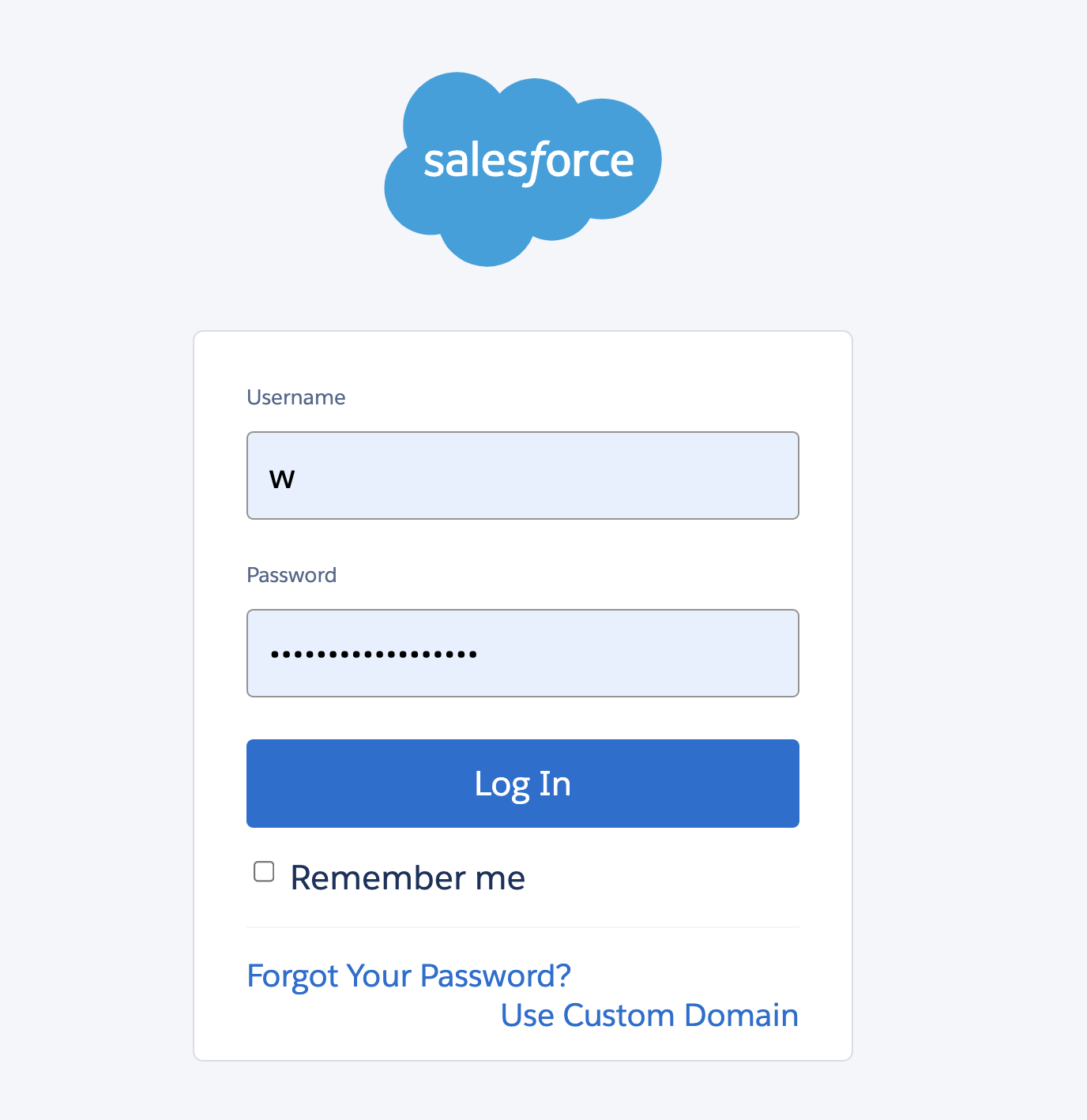 Log in to your Salesforce account
Select Log In to verify the connection.
# Configure the pipeline
Complete the following steps to configure Salesforce as your data pipeline source:
Select Create > Data pipeline.
Provide a Name for the data pipeline.
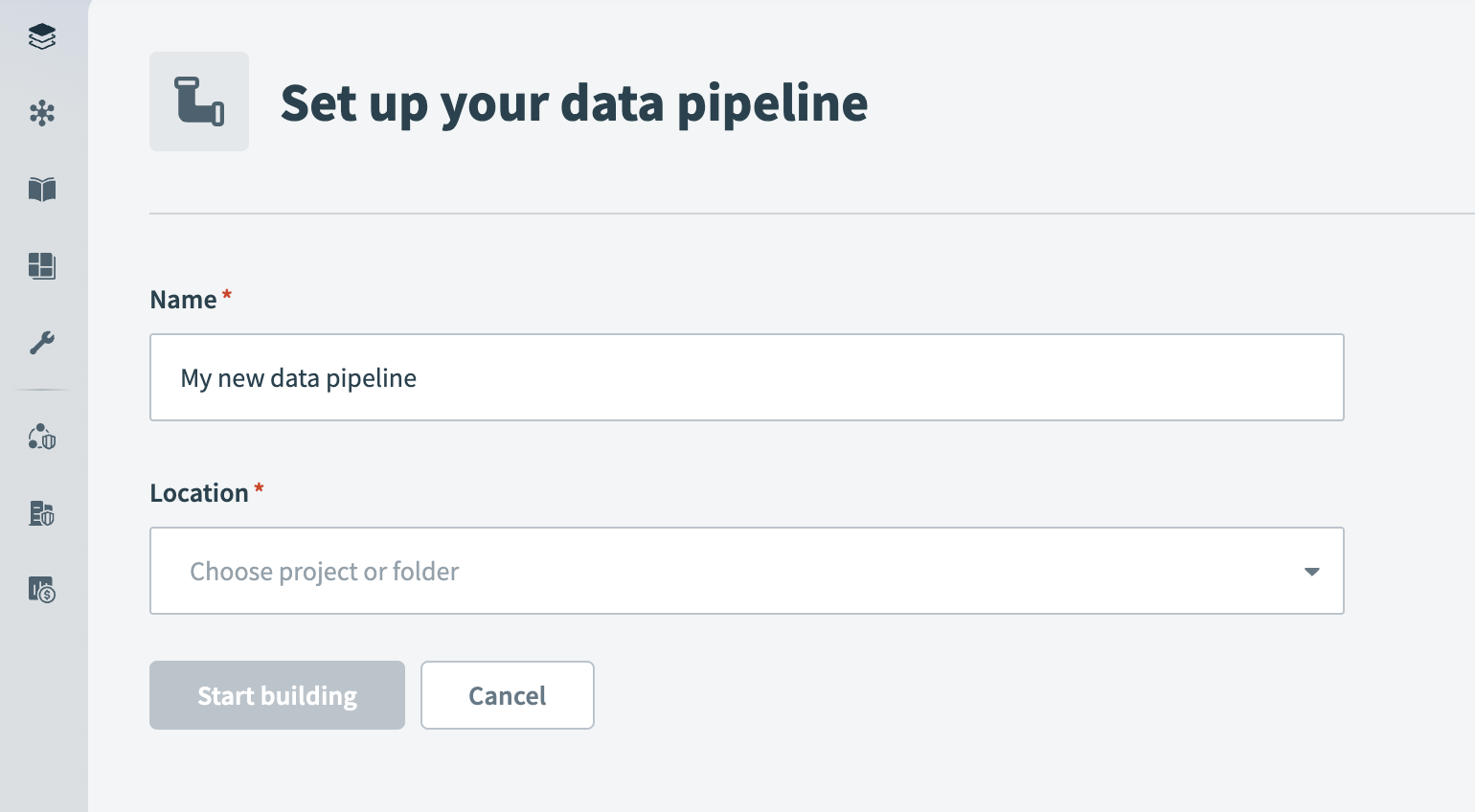 Data pipeline setup
Use the Location drop-down menu to select the project where you plan to store the data pipeline.
Click Start building.
Click the Extract new/updated records from source app trigger. This trigger defines how the pipeline retrieves data from the source application.
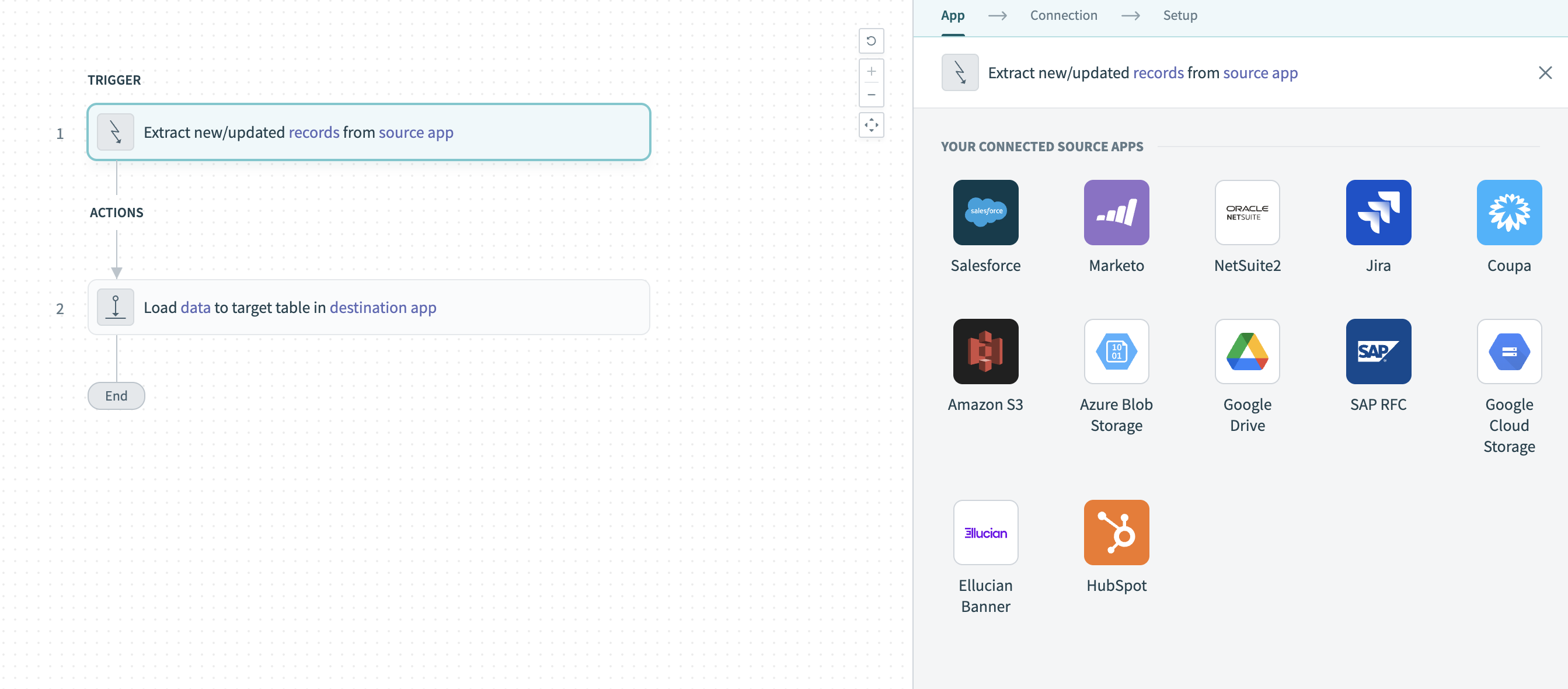 Configure the Extract new/updated records from source app trigger
Select Salesforce from Your Connected Source Apps.
Choose the Salesforce connection you plan to use for this pipeline. Alternatively, click + New connection to create a new connection.
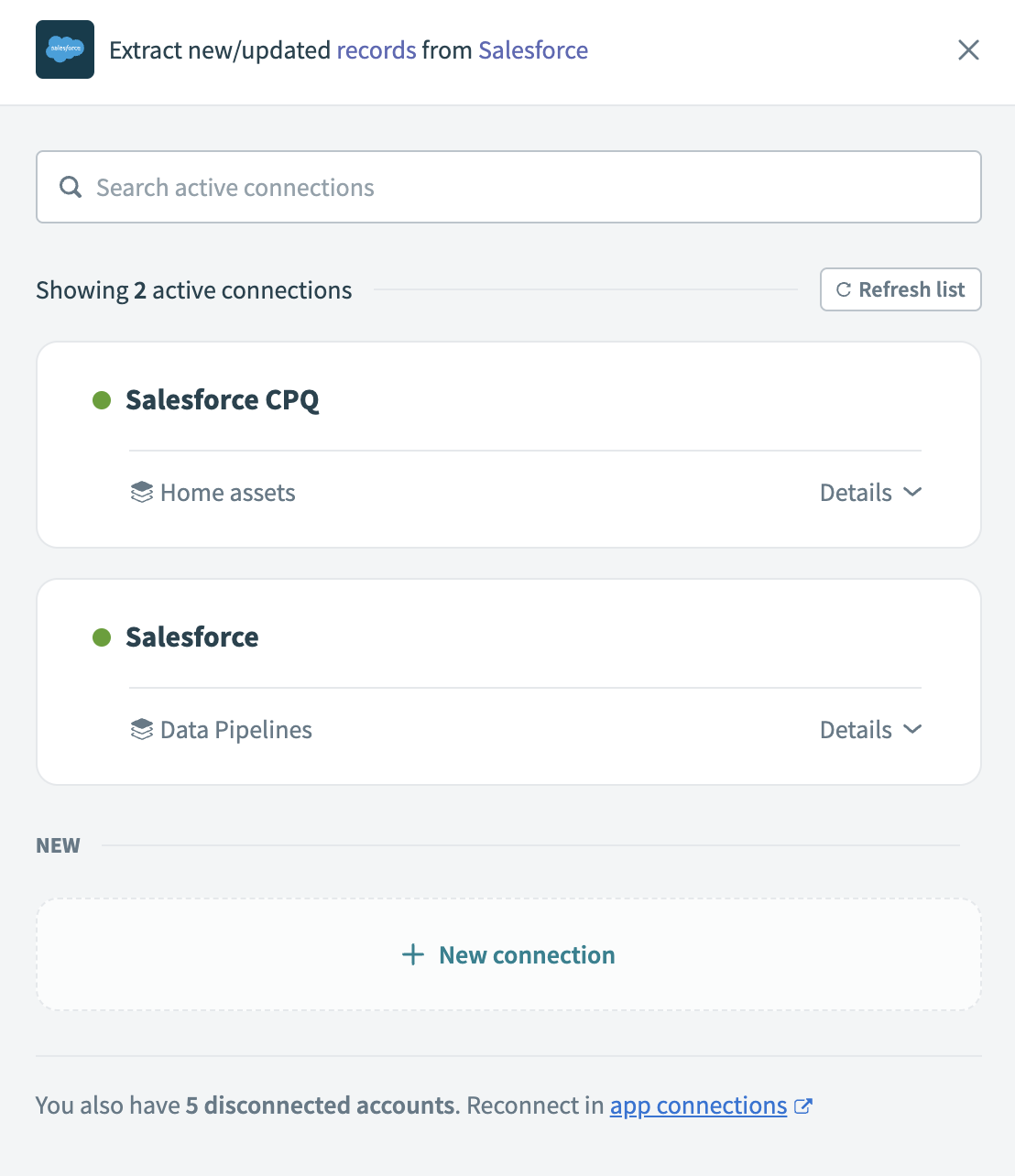 Choose a Salesforce connection
Click Add object to open the object wizard.
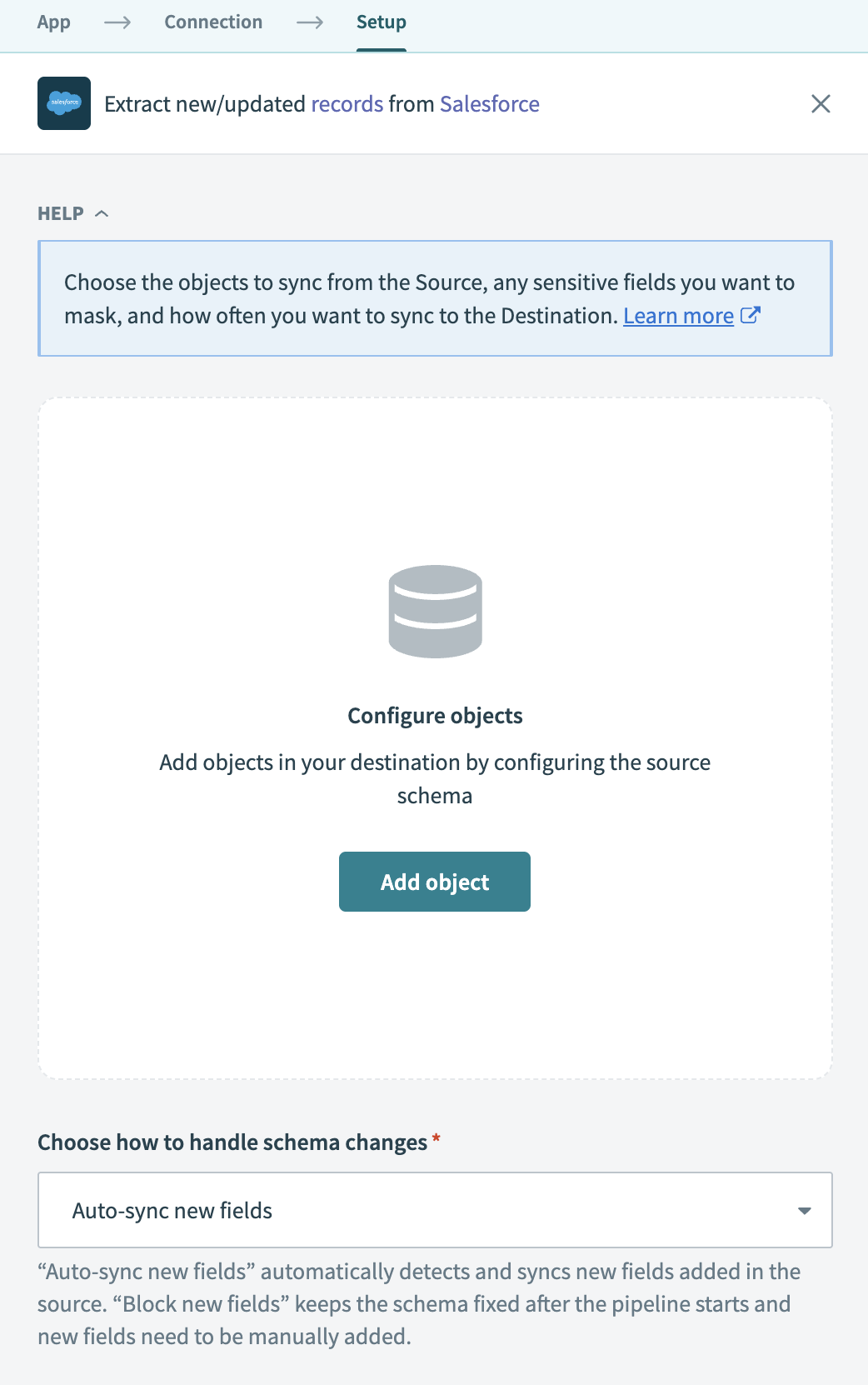 Add object
Search or browse the list of available Salesforce objects. Select the objects you plan to sync and click Add.
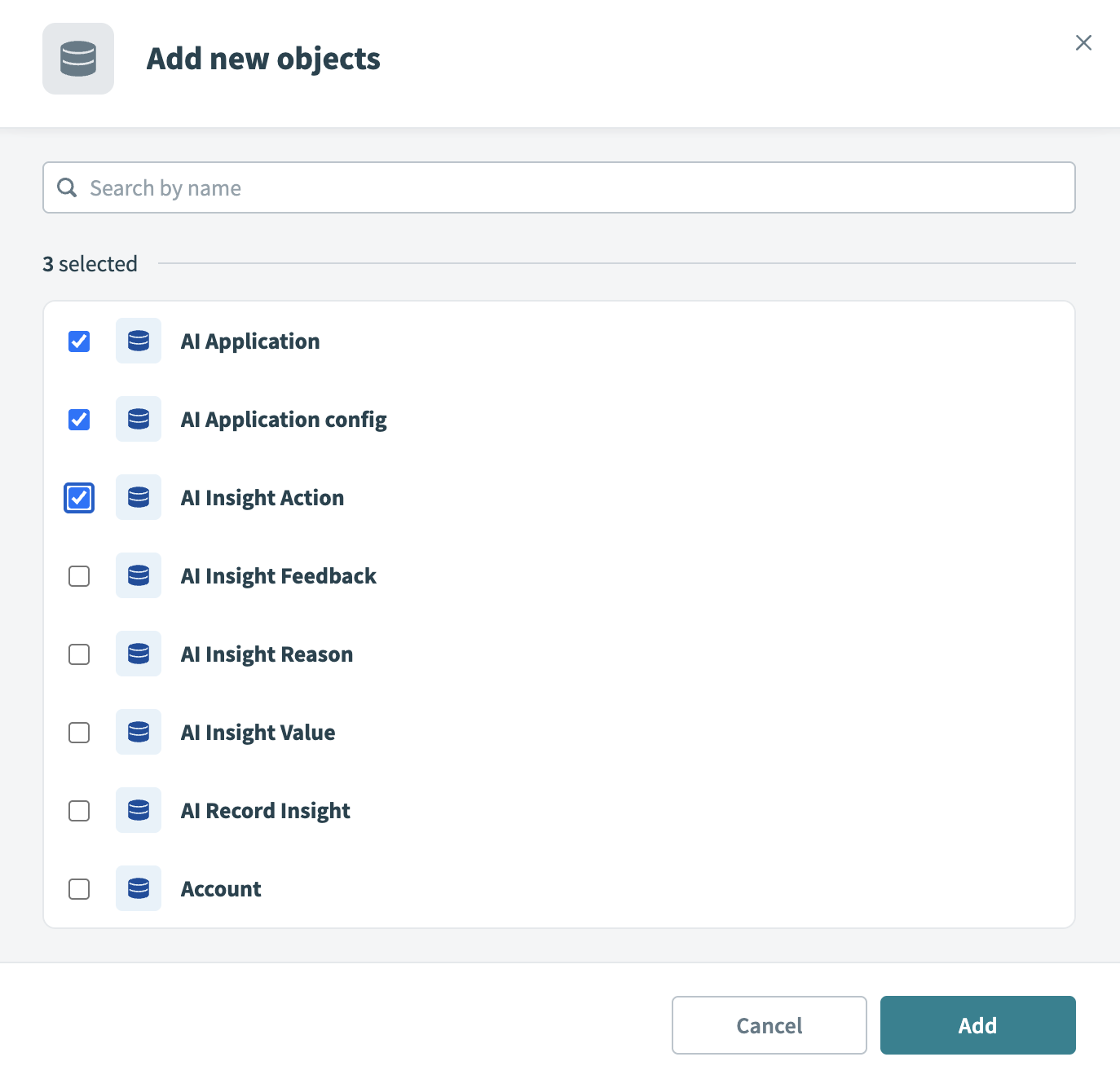 Add object
Review and customize the schema for each selected object. When you select an object, the pipeline automatically fetches its schema to ensure the destination matches the source.
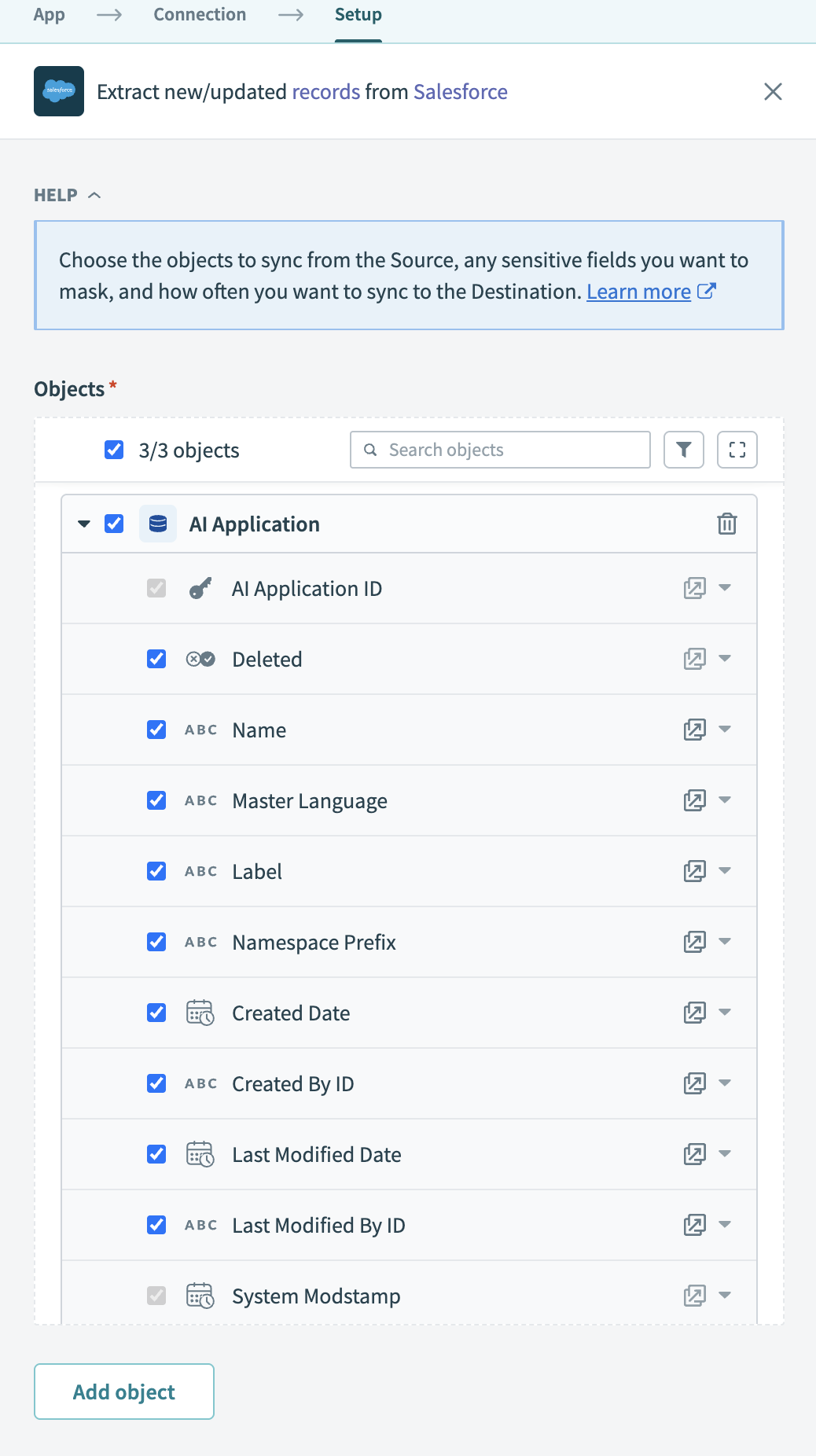 Expand object
You can expand any object to view its fields. Keep all fields selected to extract all available data, or deselect specific fields to exclude them from data extraction and schema replication.
Click Add object again to add more objects using the same flow. You can repeat this step to include multiple Salesforce objects in your pipeline.
Choose how to handle schema changes:
- Select Auto-sync new fields to detect and apply schema changes automatically.
- Select Block new fields to manage schema changes manually. This option may cause the destination to fall out of sync if the source schema updates.
Unsynchronized schema changes, also known as schema drift, can cause issues if not managed. Refer to the Schema drift section for more information.
Configure how often the pipeline syncs data from the source to the destination in the Frequency field. Choose either a standard time-based schedule or define a custom cron expression.
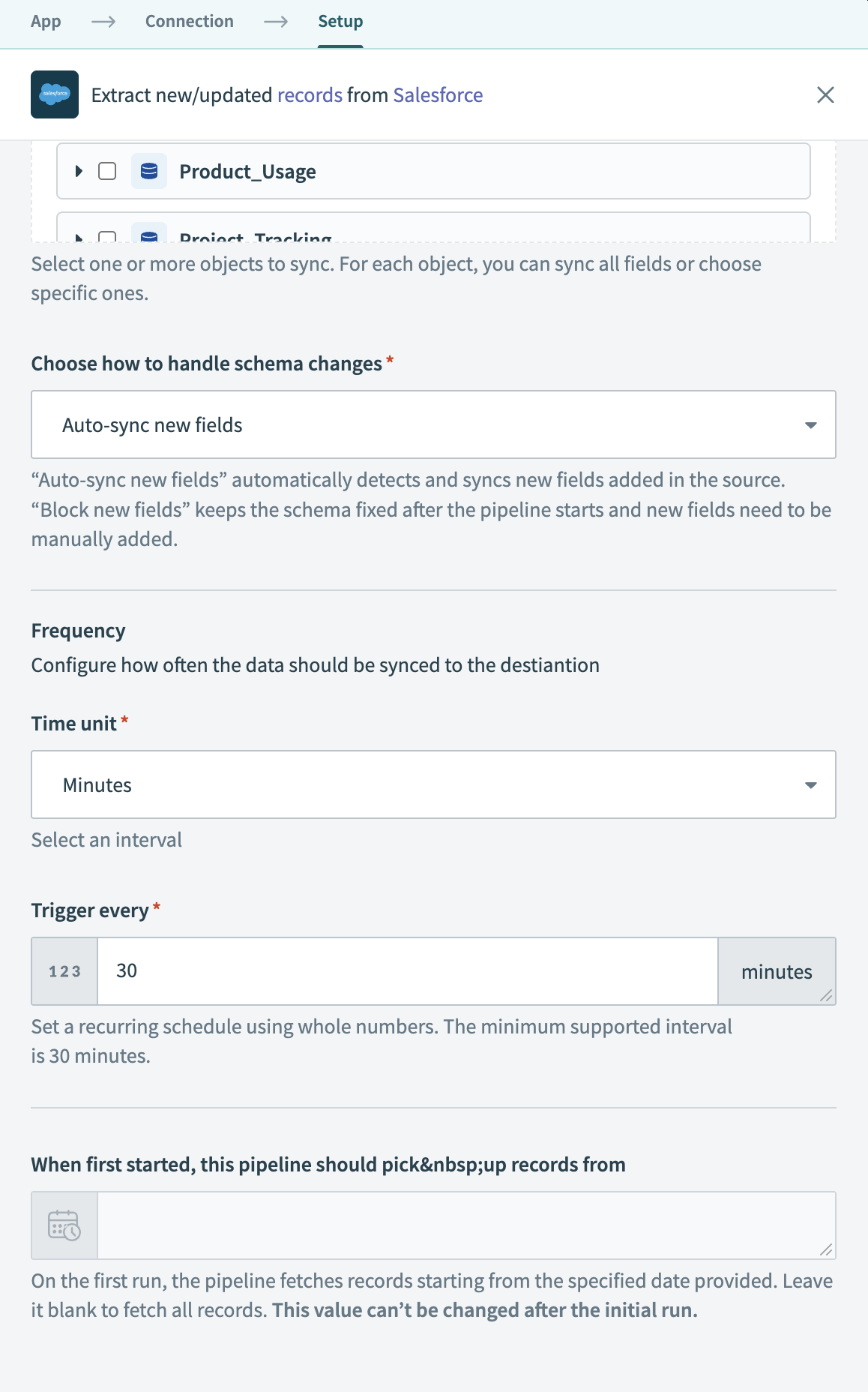 Configure sync frequency
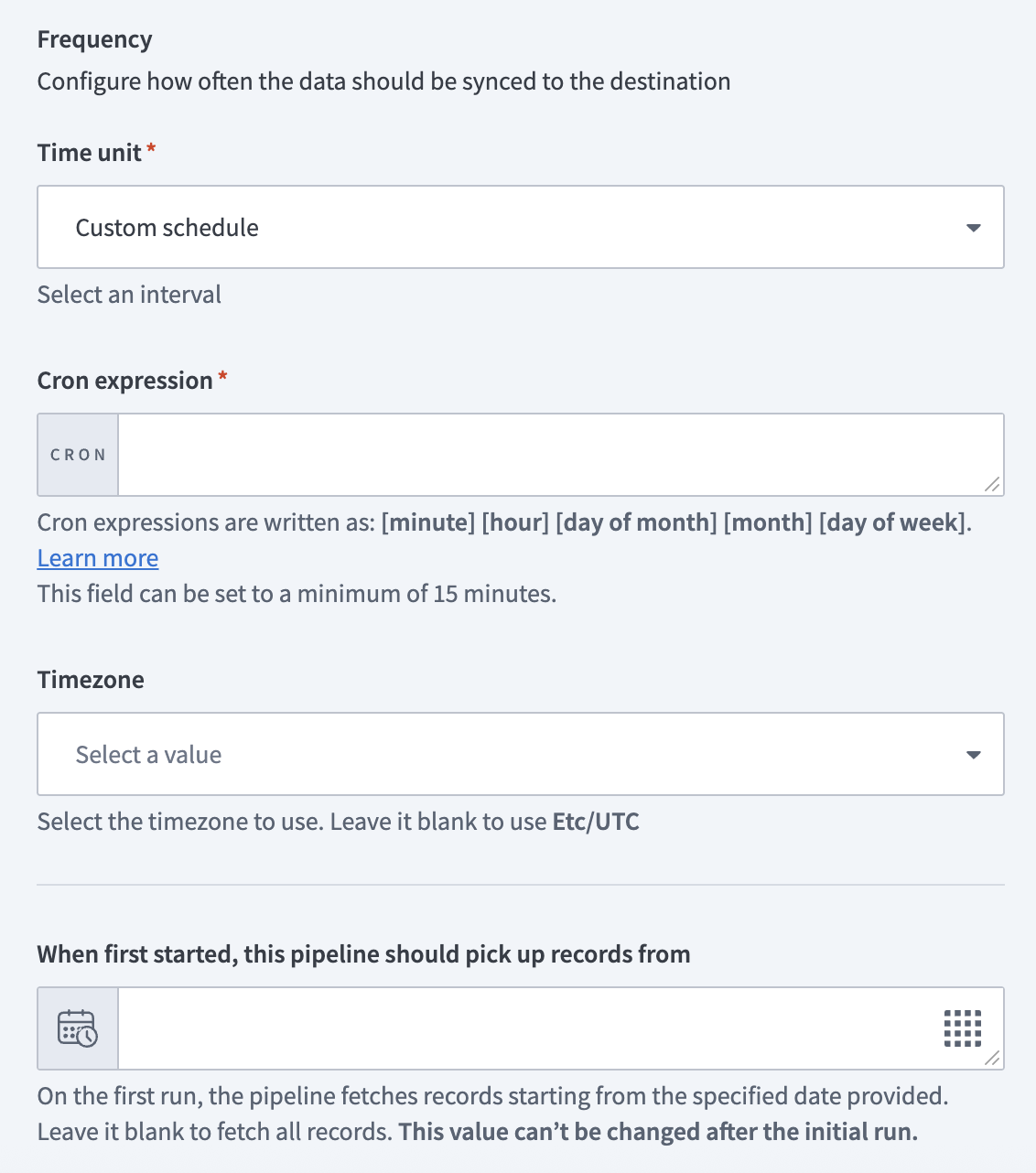 Configure sync frequency
# Supported Salesforce objects
The pipeline supports most Salesforce standard and custom objects with read permissions. Workato uses the Salesforce Bulk API v2 (opens new window) to fetch object records.
Last updated: 2/6/2026, 5:48:07 PM